(858) 454-4114

What a Dental Crown Actually Does for Your Tooth
posted: Sep. 21, 2026.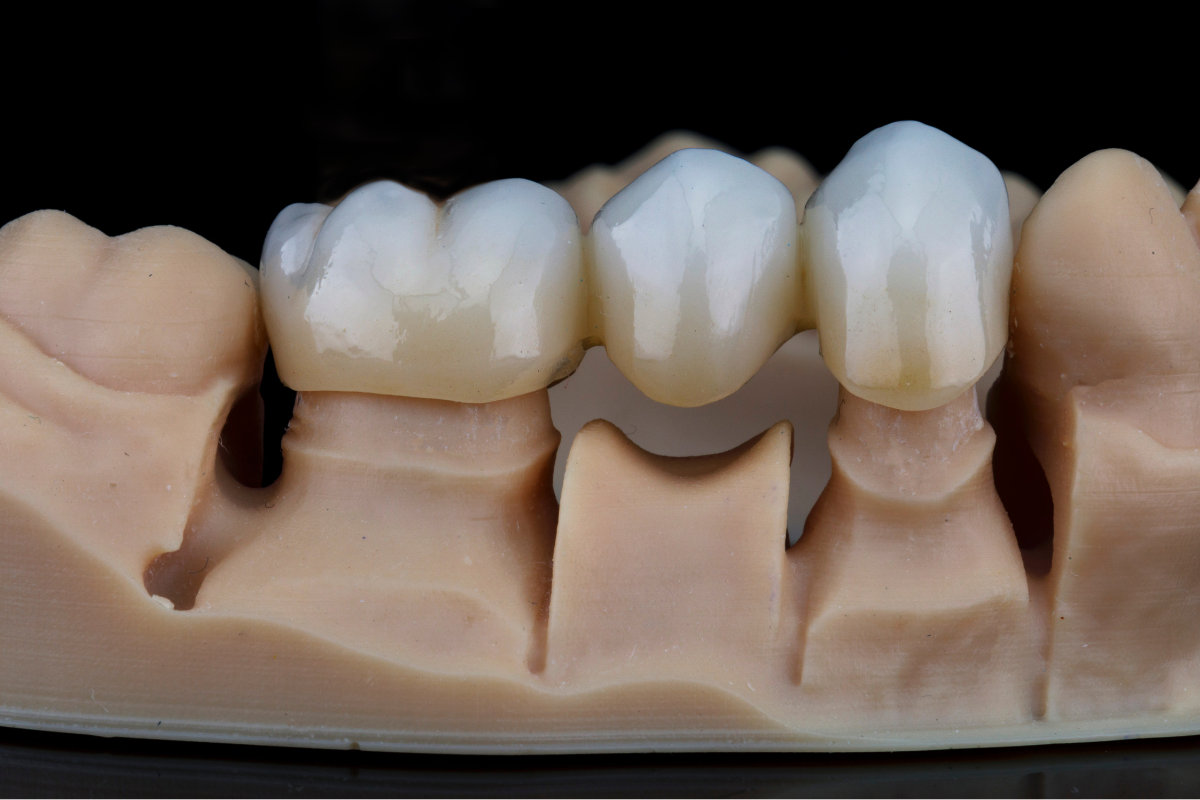
A tooth doesn’t have to hurt for something to be seriously wrong with it. Plenty of people walk around with a cracked cusp, a filling that’s worn thin, or a root-canaled tooth that looks fine on the outside and has no business chewing anything harder than pasta. The tooth survives day to day, right up until it doesn’t — usually at the worst possible moment, mid-bite into something ordinary like a piece of bread or an ice cube.
A dental crown exists for exactly that gap between “technically still there” and “actually strong enough to trust.” It’s a custom-made cap that fits completely over a damaged or weakened tooth, rebuilding its shape, size, and strength while protecting whatever’s left of the natural structure underneath.
If you’ve been putting off a search for dental crowns in La Jolla because a chipped or cracked tooth hasn’t actually stopped you from eating, here’s what that cap is doing that a filling can’t.
What a Crown Is Actually Protecting Against
Fillings work well for small, contained cavities, but they have limits. Once too much of the original tooth structure is gone, a filling has nothing solid left to bond to, and the tooth becomes a stress point waiting to crack under normal biting force. A crown solves this by encasing the entire visible portion of the tooth in a single, strong shell — porcelain, ceramic, or porcelain fused to metal, depending on the location and how much force the tooth handles day to day.
Situations Where a Crown Usually Comes Up
- A cavity too large for a filling to reasonably repair
- A tooth that’s fractured or worn down significantly
- A tooth that’s already had root canal treatment and needs long-term protection
- A dental implant that needs its final, functional restoration
- A dental bridge that needs support from the teeth on either side
- A tooth with discoloration or an irregular shape that a whitening treatment won’t fix
Not every damaged tooth needs one. Part of a proper evaluation is figuring out whether a crown is actually the right call or whether something more conservative will hold up just as well.
What the Actual Process Looks Like
Getting a crown almost always takes two visits, and neither one is particularly dramatic. At the first, the tooth is gently reshaped to make room for the crown, and a digital impression is taken and sent to a dental lab that builds the permanent piece to exact specifications. A temporary crown goes on in the meantime, so the tooth stays protected and functional while the real one is being made.
The second visit is shorter. The permanent crown comes back from the lab, the fit and bite get checked carefully, and it’s cemented into place. Most patients walk out with a tooth that feels normal within a day or two, not a tooth that feels like foreign material sitting where a natural one used to be.
What You Actually Get Out of It
- Real protection. A cracked or thinned tooth stops being one hard bite away from a bigger problem.
- Normal function back. Chewing on that side of your mouth stops being something you avoid.
- A natural look. Modern materials are shaded and shaped to blend in with the teeth around them, not stand out.
- Bite stability. A properly fitted crown helps keep neighboring teeth from drifting out of position.
- Longevity. With reasonable care, a crown typically holds up for ten to fifteen years, sometimes longer.
Why It’s Worth Handling Sooner Rather Than Later
A tooth that needs a crown doesn’t usually get better on its own while you wait. Cracks tend to spread, decay under an old filling tends to grow, and a tooth that’s merely at-risk today can turn into an extraction candidate a year from now. Dr. Grey Cunningham’s team uses precise digital imaging to catch these situations early, which is why fitting dental crowns in La Jolla is one of the most common procedures at our practice — far more common than the emergency extractions that come from waiting too long.
Frequently Asked Questions
1. How long do dental crowns actually last?
Ten to fifteen years is typical with good oral hygiene and routine checkups. Grinding, clenching, and skipped cleanings all shorten that window.
2. Is getting a crown painful?
The procedure is done under local anesthesia, so most patients describe it as uneventful rather than painful. Mild sensitivity for a day or two afterward is normal.
3. What materials are crowns actually made from?
Porcelain, ceramic, and porcelain fused to metal are the most common options, chosen based on where the tooth sits and how much bite force it needs to handle.
4. How do I take care of a crown once it’s placed?
The same way you’d care for a natural tooth — brushing twice a day, flossing daily, and keeping up with routine cleanings. A crown doesn’t decay, but the tooth underneath it still can.
5. Does insurance typically cover crowns?
It depends on the plan and the reason for the crown. Our team can check your specific coverage and walk you through the cost before any work begins.
Get the Tooth Looked At Before It Makes the Decision For You
A tooth that’s cracked, worn, or already root-canaled is running on borrowed time whether it feels like it or not. If you’ve been meaning to look into dental crowns in La Jolla, don’t wait for a bigger break to force the issue. Call (858) 454-4114 or request an appointment online, and let’s figure out whether a crown, or something simpler, is the right move for your tooth.
**Disclaimer: This content should not be considered medical advice and does not imply a doctor-patient relationship.